
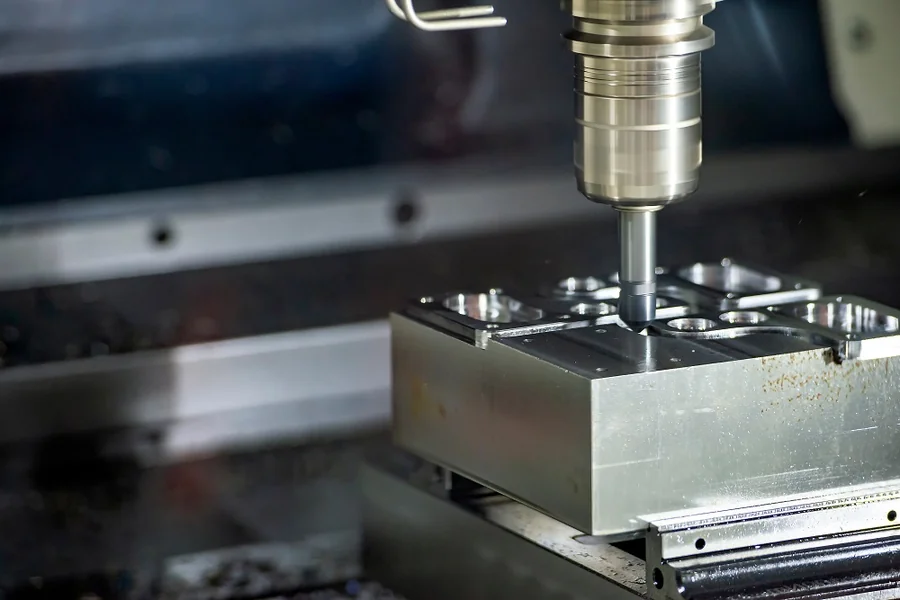
Precision manufacturing relies on more than cutting tools alone. A wide range of machining tools and accessories work together to produce accurate, repeatable results while supporting efficiency and safety throughout the machining process. Some components hold workpieces securely, while others stabilize tooling, improve cutting performance, or help achieve tighter tolerances. Understanding the purpose of these essential accessories can help machinists choose the right equipment for specific applications and maintain consistent production quality.
Locknuts
Locknuts are fastening components designed to keep threaded assemblies securely in place, even when exposed to vibration or repeated machine movement. They help prevent fasteners from loosening during machining operations, protecting both equipment and workpieces from unnecessary movement.
Locknuts are commonly used to secure bearings, shafts, arbors, and other rotating components that require precise alignment. Their role is essential for maintaining machine stability throughout production. A properly secured assembly helps minimize unexpected movement that can reduce machining accuracy, accelerate component wear, or result in equipment downtime. By keeping critical parts firmly in position, lock nuts support safer and more consistent machining operations.
Boring Heads
Boring heads are cutting accessories used to enlarge and finish existing holes with a high degree of precision. Mounted on milling machines or machining centers, they allow fine adjustments that produce accurate hole diameters and smooth internal surfaces. Modular boring heads are utilized when standard drilling alone cannot achieve the required dimensional accuracy.
Many precision assemblies rely on holes that meet exact specifications for proper performance. Even small dimensional variations can affect the fit of bearings and other components. With precise control over the machining process, boring heads help maintain tight tolerances and create high-quality surface finishes.
Collets
Collets are precision workholding accessories designed to securely grip cutting tools or workpieces during machining. Their design applies clamping force evenly around the tool shank, reducing runout and improving machining accuracy. Available in a variety of sizes and styles, collets can be matched to different machine tools and machining applications. Selecting the correct collet also helps ensure a secure fit, allowing tools to perform as intended during a wide range of machining operations.
A secure, balanced grip helps minimize vibration during cutting, resulting in greater tool stability and more reliable performance. This improved stability contributes to better surface finishes, extends tool life, supports more accurate cuts, and helps machinists maintain consistent results throughout the production process. Reliable tool holding also reduces the likelihood of tool slippage, making machining operations more efficient and dependable.
Tool Holders
Tool holders connect cutting tools to the machine spindle while maintaining proper alignment and rigidity. A high-quality tool holder helps reduce vibration and improves cutting stability. Different holder designs are available for milling, drilling, tapping, and other machining operations. Tool holders are essential because they directly influence machining performance. Proper tool retention improves cutting accuracy while reducing the likelihood of tool deflection, helping manufacturers produce parts that meet precise dimensional requirements.
End Mills
End mills are versatile cutting tools used for milling slots, pockets, contours, and complex shapes. They come in various flute configurations and materials to suit different workpiece materials and machining requirements. Selecting the appropriate end mill helps improve cutting performance and surface finish. A correct end mill is also important because different machining tasks require different cutting characteristics. Using the appropriate tool helps increase efficiency and reduce unnecessary wear on both the cutter and the machine.
Drill Chucks
Drill chucks are essential tool-holding components that secure drill bits and other round-shank tools during drilling operations. Their adjustable jaws provide a strong hold, keeping the tool centered and stable while cutting through the workpiece. Available in keyed and keyless versions, drill chucks allow machinists to choose the right option based on equipment requirements and workflow needs.
The importance of drill chucks comes from their role in maintaining drilling accuracy and consistency. A secure connection between the machine and cutting tool helps prevent slipping and supports safer operations while reducing wear on both the tool and the workpiece.
Face Mills
Face mills are cutting tools used to machine large, flat areas of a workpiece with speed and accuracy. They use multiple replaceable inserts to remove material evenly across the surface, making them effective for creating flat finishes and preparing parts for additional machining steps. These tools are often used in milling operations that require efficient stock removal and consistent surface results.
Face mills are important because they help machinists complete surface preparation tasks more efficiently. Their ability to cover a larger cutting area while maintaining precision reduces the number of passes needed and helps create workpieces that meet quality standards.
Arbors
Arbors provide a secure mounting point for cutters and other rotating tooling. They help maintain concentricity between the spindle and cutting tool, contributing to consistent machining accuracy. Proper arbor selection supports stable cutting performance and reduces unnecessary tool movement. Stable tool mounting is critical for maintaining precision. A properly fitted arbor improves rigidity and supports cutting tools to perform as intended throughout demanding machining applications.
Rotary Tables
Rotary tables are precision machining accessories that allow workpieces to be rotated and positioned accurately during machining operations. They make it easier to create circular features, equally spaced holes, curved cuts, and complex angular profiles without repeatedly removing and repositioning the workpiece. Available in different sizes and configurations, rotary tables can be used with manual milling machines and CNC equipment that require controlled movement and precise indexing.
Their importance comes from improving both machining efficiency and consistency. Controlled rotation reduces setup time and maintains accurate positioning throughout multiple operations. With smooth and repeatable movement, rotary tables help reduce alignment errors and support more reliable results during precision manufacturing processes.
Dial Indicators
Dial indicators are precision measuring instruments used to verify alignment and inspect dimensional accuracy. While they do not remove material, they play an important role in machine setup and quality control by providing accurate measurements before production begins. These measurements help ensure machining operations meet required tolerances and maintain consistent results.
Reliable measurement is essential for achieving precision throughout the manufacturing process. Dial indicators allow machinists to detect alignment issues early, helping minimize material waste and improve overall product quality.
Final Thoughts
Precision manufacturing depends on the right combination of tools and accessories to achieve accurate, consistent results. From fastening components like lock nuts to cutting accessories such as boring heads, each plays an important role in supporting precision and efficient machining operations. Understanding the purpose of these components helps machinists make informed tooling decisions and maintain the quality required across a wide range of manufacturing applications.

A Relationship Manager for Celebrities’. Sharing my knowledge about your favorite celebrities’ son, kids and family