
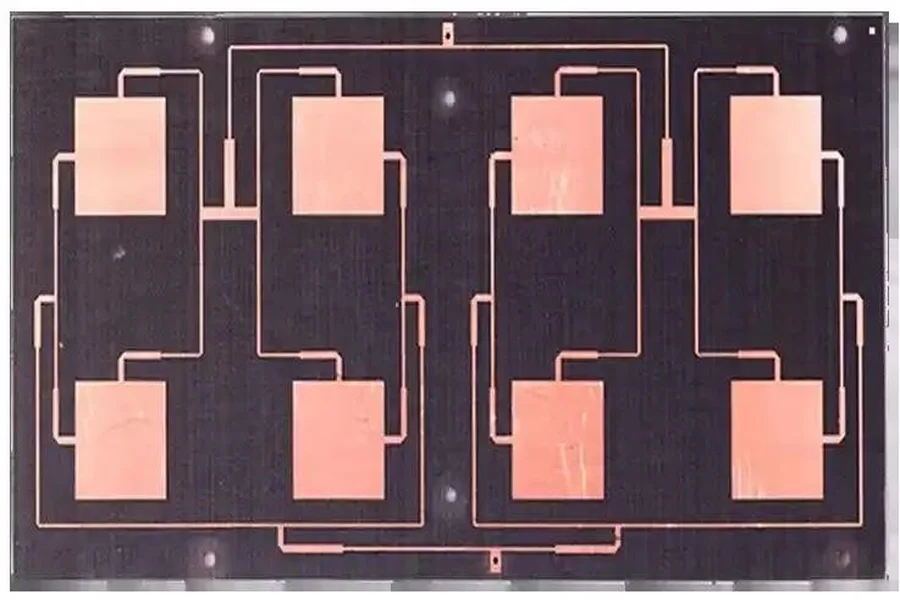
A Teflon PCB is a printed circuit board fabricated using polytetrafluoroethylene (PTFE) as the base material instead of conventional FR4. Teflon is a synthetic fluoropolymer of tetrafluoroethylene, known for its excellent electrical insulation, high heat resistance, and low dielectric constant. These qualities make it highly suitable for RF, microwave, and high-speed digital applications.
While standard PCB materials like FR4 struggle at higher frequencies due to signal loss, Teflon-based substrates perform far better under such demanding conditions. Teflon PCBs are particularly ideal in environments where signal clarity, stability, and reliability are critical.
Key Properties of Teflon PCB
Low Dielectric Constant and Dissipation Factor
One of the most significant advantages of a Teflon PCB is its low dielectric constant (typically 2.1–2.6), which ensures minimal signal loss even in high-frequency operations. Coupled with a low dissipation factor, it maintains signal integrity and reduces the likelihood of power loss over long distances.
High Thermal Stability
Teflon has an exceptionally high thermal stability, with a glass transition temperature (Tg) well above that of conventional PCB materials. This allows Teflon PCBs to operate reliably in extreme heat or cold, making them perfect for military, aerospace, and automotive applications.
Chemical and Moisture Resistance
The non-reactive nature of PTFE gives Teflon PCBs outstanding resistance to moisture and chemicals. This makes them ideal for use in marine electronics, medical equipment, and outdoor telecom infrastructure where moisture exposure is a concern.
Applications of Teflon PCB
RF and Microwave Systems
Teflon PCBs are widely used in radio frequency and microwave systems such as radar, satellite receivers, and base stations. The low signal loss and excellent impedance control make them ideal for these highly sensitive applications.
Aerospace and Defense
In avionics and military systems, where reliability under extreme stress is non-negotiable, Teflon PCBs are preferred due to their durability, low outgassing, and thermal performance.
Medical and Industrial Equipment
Teflon’s stability and chemical resistance make it an excellent choice for sensitive medical instruments and industrial control systems that require long-term durability and precision.
Challenges in Manufacturing Teflon PCB
Difficult to Machine and Drill
PTFE is a soft, non-rigid material compared to traditional PCB substrates. Drilling precise holes in a Teflon PCB requires specialized equipment and expertise to avoid deformation and achieve accurate via structures.
Plating and Adhesion
Unlike FR4, Teflon is non-stick by nature, which can pose challenges during the plating and lamination processes. Special surface treatments and advanced bonding techniques are needed to ensure proper adhesion of copper layers and surface finishes.
Cost and Availability
Teflon PCB materials are generally more expensive than standard substrates. They also require careful handling during fabrication, increasing both lead times and manufacturing costs. However, the performance benefits in high-frequency applications often outweigh the additional investment.
Benefits of Choosing a Teflon PCB
Signal Integrity
In applications like 5G antennas, radar systems, and high-speed routers, maintaining clean and distortion-free signal transmission is crucial. Teflon PCB ensures high signal integrity even in multi-layer configurations and long traces.
Long-Term Reliability
Teflon’s thermal and chemical resilience contributes to long-term operational stability, minimizing failure rates and extending product lifespan in mission-critical systems.
Compact and High-Speed Designs
Thanks to its superior electrical performance, designers can create smaller, faster, and more efficient circuit layouts. This is essential in today’s miniaturized electronics and IoT devices.
Why Choose an Experienced Teflon PCB Manufacturer?
When working with Teflon PCB, expertise matters. Unlike standard boards, Teflon-based PCBs require precise handling, drilling, and plating techniques. A reliable teflon pcb manufacturer understands the unique behavior of PTFE materials and uses specialized machinery and testing processes to ensure quality.
Choosing the right partner can significantly reduce the risk of defects, signal failures, or project delays. Whether you’re prototyping or producing in high volume, make sure your teflon pcb manufacturer offers experience with RF and microwave PCB fabrication, robust quality control, and compliance with international standards.
If you’re looking to build high-frequency electronic products that demand low-loss performance, thermal stability, and environmental resistance, Teflon PCBs are your best bet. And partnering with a specialized teflon pcb manufacturer is the first step toward guaranteed success in your product development cycle.

A Relationship Manager for Celebrities’. Sharing my knowledge about your favorite celebrities’ son, kids and family